What is reproductive and sexual anatomy?
Reproductive and sexual anatomy includes your genitals and your internal sex and reproductive organs. Everyone’s reproductive and sexual anatomy looks a little different.
What parts of our bodies are sexual?
Reproductive and sexual anatomy (also known as sex anatomy) includes the sex organs on the outside of your body and the sex and reproductive organs on the inside of your body. Some examples of sex organs are the vulva (which includes your vagina) and penis. Reproductive organs include things like the uterus and testicles.
That being said, any part of your body can be sexual. You might have heard that your brain is your most important sex organ. That’s because it controls your sexual response — how your body reacts to arousal, sex, or masturbation. It’s also where your sexual fantasies and identities are.
You can also think of your skin as one big sex organ, with its millions of sensitive nerves. Parts of your body that when touched make you feel aroused are called “erogenous zones.” Not everyone has the same erogenous zones, but common ones are breasts and nipples, the anus, neck, lips, mouth, tongue, back, fingers and toes, hands, feet, earlobes, and inner thighs. You get the idea: Any part of your body can be considered sexual depending on how it makes you feel.
Does everyone have the same sexual anatomy?
Everyone’s sexual anatomy is a little bit different. Most people have either a penis and scrotum or a vulva, but each person’s genitals are uniquely their own.
When you were born, your doctor probably assigned you a sex — male or female — based on your sex anatomy. But that doesn’t necessarily say anything about your gender identity.
Some people’s assigned sex and gender identity are pretty much the same, or in line with each other. These people are called cisgender. Other people feel that the sex they were assigned at birth doesn’t match their gender identity. So, for example, a person could be born with a penis, but identify as female. These people often call themselves transgender or trans.
Other people have sex anatomies that don’t fit the typical definition of female or male. They may be described as intersex. There are lots of different combinations of body parts and hormones that fall under the intersex umbrella. Being intersex doesn’t necessarily have any connection with a person’s gender identity.
What are the parts of the female sexual anatomy?
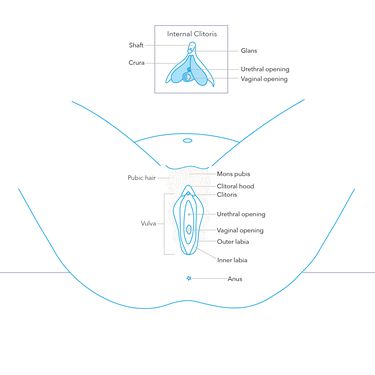
Sexual anatomy that’s typically called female includes the vulva and internal reproductive organs like the uterus and ovaries
What are the external parts?
The vulva is the part of your genitals on the outside of your body — your labia, clitoris, vaginal opening, and the opening to the urethra (the hole you pee out of). While vaginas are just one part of the vulva, many people say “vagina” when they really mean the vulva. But the vulva has a lot more going on than just the vagina.
No 2 vulvas look exactly the same, but they’re made up of the same basic parts.
•Labia
The labia (lips) are folds of skin around your vaginal opening. The labia majora (outer lips) are usually fleshy and covered with pubic hair. The labia minora (inner lips) are inside your outer lips. They begin at your clitoris and end under the opening to your vagina.
Labia can be short or long, wrinkled or smooth. Often one lip is longer than the other. They also vary in color from pink to brownish black. The color of your labia can change as you get older. Some people have larger outer lips than inner lips, and many have larger inner lips than outer lips. Both are sensitive, and swell when you’re turned on.
•Clitoris
The tip of the clitoris (AKA glans) is located at the top of your vulva, where your inner lips meet. Everyone’s is a different size. It can be about as small a pea or as big as a thumb. The tip of the clitoris is covered by the clitoral hood.
This is just the beginning of the clitoris though. It extends inside your body, back and down on both sides of the vagina. This part, called the shaft and crura (roots and legs), is about 5 inches long.
Your clitoris is made of spongy tissue that becomes swollen when you’re aroused (turned on). It has thousands of nerve endings — more than any other part of the human body. And it’s only purpose? To make you feel good.
•Opening of the urethra
The urethral opening is the tiny hole that you pee out of, located just below your clitoris.
•Opening of the vagina
The vaginal opening is right below your urethral opening. It’s where menstrual blood leaves your body, and babies are born through the vaginal opening. A variety of things can go inside your vagina, like fingers, penises, sex toys, tampons, and menstrual cups.
•Anus
The anus (AKA butthole) is the opening to your rectum. The anus has lots of sensitive nerve endings, so some people experience sexual pleasure from anal stimulation.
•Mons pubis
The mons is the fleshy mound above your vulva. After puberty, it’s covered with pubic hair. It cushions your pubic bone.
How many holes do we have down there?? The answer is 3 or three😊
What are the internal parts?
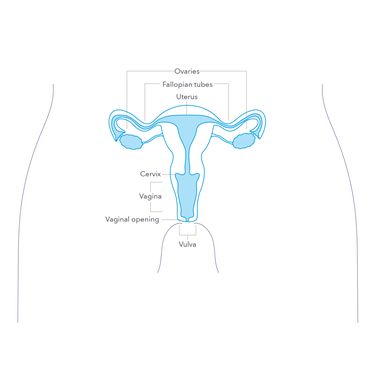
The internal parts of female sexual anatomy (or what’s typically referred to as female) include:
•Vagina
The vagina is a tube that connects your vulva with your cervix and uterus. It’s what babies and menstrual blood leave the body through. It’s also where some people put penises, fingers, sex toys, menstrual cups, and/or tampons. Your vagina is really stretchy, and expands when you feel turned on.
•Cervix
The cervix divides your vagina and uterus, located right between the two. It looks like a donut with a tiny hole in the middle. This hole connects your uterus and your vagina. It lets menstrual blood out and sperm in. Your cervix stretches open (dilates) during childbirth.
You can usually feel your cervix at the end of your vagina if you insert your fingers, a penis, or a sex toy into your vagina. Your cervix separates your vagina from the rest of your body, so things like tampons or other objects can’t get “lost” inside of you.
•Uterus
The uterus is a pear-shaped muscular organ about the size of a small fist. It’s sometimes called the womb because it’s where a fetus grows during pregnancy. During sexual arousal, the lower part of your uterus lifts toward your belly button. That’s why your vagina gets longer when you’re turned on. It’s called “tenting.”
•Fallopian tubes
The fallopian tubes are 2 narrow tubes. They carry eggs from your ovaries to your uterus. Sperm travels through them to try to fertilize your egg.
•Fimbriae
The fimbriae look like tiny fingers at the end of each fallopian tube. When your ovary releases an egg, they sweep it into your fallopian tube.
•Ovaries
The ovaries store your eggs. They also produce hormones, including estrogen, progesterone, and testosterone. These hormones control things like your period and pregnancy. During puberty, your ovaries start to release an egg each month. They do so until menopause. Sometimes your ovaries release more than one egg.
•Bartholin’s glands
The Bartholin’s glands are near your vaginal opening. They release fluid that lubricates your vagina (makes it wet) when you’re turned on.
•Skene’s glands
The Skene’s glands are on either side of your urethral opening. They release fluid during female ejaculation.They’re also called paraurethral glands or female prostate glands.
•Hymen
The hymen is the thin, fleshy tissue that stretches across part of the opening to the vagina. Hymens vary a lot in how much of your vaginal opening they cover, and they can sometimes (but not always) tear and cause bleeding the first few times you put something in your vagina.
•G spot
The G spot, or Gräfenberg spot, is located a few inches inside your vagina on the front wall. Your G spot can swell when you’re turned on. Some people like the feeling of having their G spot touched.
What are the parts of the male sexual anatomy?
Sexual anatomy that’s typically called male includes your penis and scrotum (external male genitalia) and internal reproductive organs like the testicles.
What are the external parts?
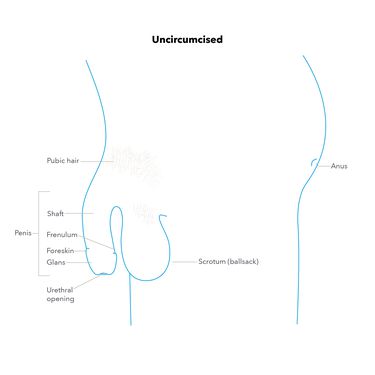
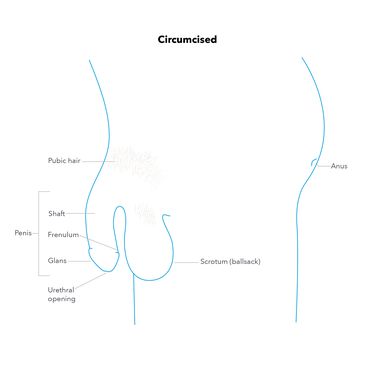
Your penis and scrotum are the two parts of the male (or what’s typically called male) external sex anatomy (outside your body).
Your penis is made of 3 layers of spongy tissue. When you get turned on, blood fills these tissues. This makes your penis get harder and stand up, which is also called getting an erection or hard-on.
The average size of an adult erect (hard) penis is 5 to 7 inches long. The size of your penis when it’s flaccid (soft) doesn’t have much to do with its size when it’s hard. Some penises get much bigger when they get hard. Others stay pretty much the same size.
About half of all penises in the US are circumcised, and half are uncircumcised (still have foreskin) — so both types are common. Some people call circumcised penises “cut,” and uncircumcised penises “uncut.”
Every penis looks a little different. For example, some curve like a banana when they’re hard. Others are straighter. All penises have the same parts though:
•Glans
Your glans is also called the head or tip of your penis. The opening of your urethra is here. This is where pre-ejaculate (precum) and semen (cum) come out of, and it’s where you pee out of. For many people, it’s the most sensitive part of the penis.
•Shaft
The shaft of your penis extends from the tip to where it connects to your lower belly. It looks like a tube. Your urethra is inside the shaft.
•Foreskin
The foreskin is a patch of skin that covers and protects the head (AKA glans). When your penis gets hard, the foreskin pulls back and the tip is exposed. Sometimes foreskin is circumcised (when a doctor surgically removes your foreskin) soon after birth, so not everyone has it.
•Frenulum
The frenulum is where your foreskin meets the underside of your penis. It looks like a small V just below the head. Usually part of it remains after circumcision. And for many people, it’s very sensitive.
Other external parts include:
•Scrotum
The scrotum (AKA ballsack) is the sac of skin that hangs below your penis. Your scrotum holds your testicles and keeps them at the right temperature. If it’s too cold, your scrotum pulls your testicles closer to your body. If it’s too warm, your testicles hang away from your body.
Your scrotum is covered with wrinkly skin and hair. Your scrotum can be big or small, have a little or a lot of hair, and vary in color. Some people’s scrotum is larger on one side than the other.The scrotum is super sensitive, so any hitting or twisting is extremely painful. But many people like having their scrotum gently touched during sex.
•Anus
The anus (AKA butthole) is the opening to your rectum. The anus has lots of sensitive nerve endings, so some people experience sexual pleasure from anal stimulation.
What are the internal parts?
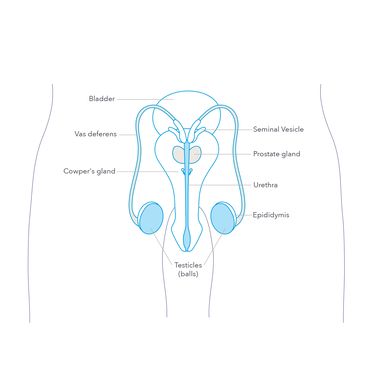
The internal parts of male sex anatomy are made up of:
•Testicles
The testicles (AKA balls) are 2 ball-like glands inside your scrotum. They make sperm and hormones like testosterone.
•Epididymis
The epididymis is a tube where your sperm matures. It connects each testicle to each vas deferens. And it holds your sperm before you ejaculate (come).
•Vas Deferens
A vas deferens is a long, narrow tube that carries sperm from the epididymis to the seminal vesicles when you ejaculate (come). There are 2 of them — one connected to each epididymis.
•Seminal Vesicles
Seminal vesicles are 2 small organs that produce semen, the fluid that sperm moves around in. They’re located below your bladder.
•Prostate Gland
The prostate gland makes a fluid that helps your sperm move. It’s about the size of a walnut or golf ball. The prostate gland is sensitive to pressure or touch in a way that many people find pleasurable.
•Cowper’s glands
The Cowper’s glands produce a fluid called pre-ejaculate or precum. This fluid prepares your urethra for ejaculation (coming). It reduces friction so your semen can move more easily. The Cowper’s glands are under the prostate and attach to your urethra. They’re also called bulbourethral glands.
•Urethra
The urethra is the tube that carries urine (pee), pre-ejaculate, and semen to your urethral opening and out of your body.
•Cremaster
The cremaster is a muscle that moves your scrotum and testicles closer to your body. This happens when you’re cold, you’re aroused, or when someone touches your inner thigh.


Leave a Reply